
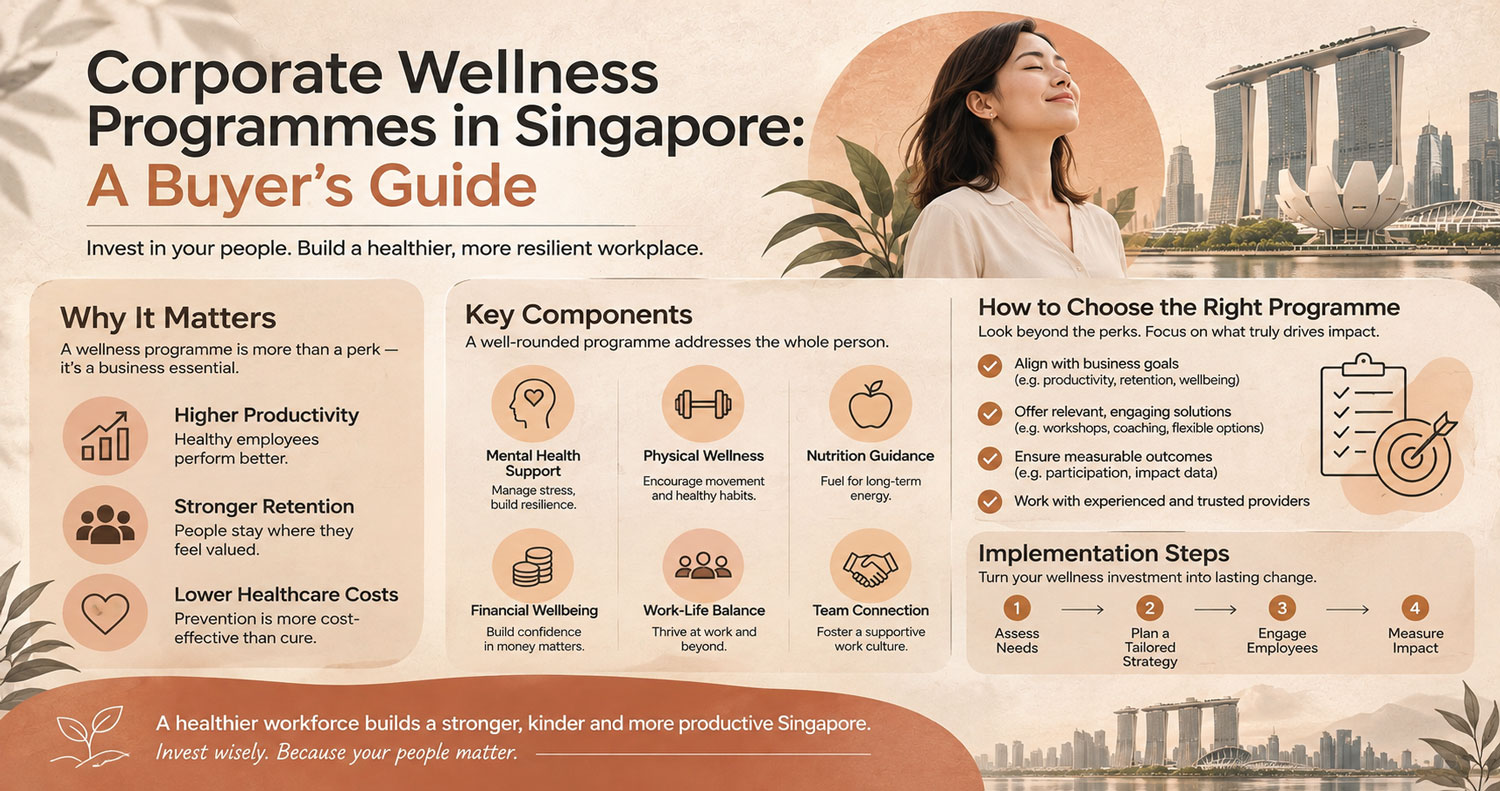
A corporate wellness program in Singapore is a strategic suite of health and wellbeing initiatives designed to improve employee resilience, reduce operational costs, and foster long-term retention. That is the standard definition. The reality on the ground is often far less inspiring. Most corporate wellness in Singapore is just window dressing. A gym perk and a mandatory wellness webinar simply will not fix a workplace that expects its people to be permanently available.
Culture beats subsidies. Every single time. Management pretending otherwise is the real waste of money. When an organization invests in health programmes, the goal should never be behavioral compliance or merely ticking a corporate governance box. It must be about nurturing human capacity.
Why Prioritize Staff Health Now?
The modern workforce is tired. Operating in a high-density, high-demand environment like Singapore extracts a heavy toll. Personal identity is deeply intertwined with professional output, from the societal script of upgrading from an HDB flat to a private condo, to the intense pressure of securing the right educational pathways for children. These pressures bleed directly into the office.
Organizations are slowly waking up to three distinct realities:
- The economic drain of unaddressed psychological distress is monumental, bleeding capital through unseen inefficiencies.
- Younger demographics absolutely refuse to trade their nervous systems for a year-end bonus.
- Regulatory frameworks are steadily tightening, making psychological safety a compliance issue, not just a fringe benefit.
The data betrays a quiet crisis. A recent governmental survey highlighted that about 1 in 3 employees routinely experience severe work-related stress. This is not a matter of people needing more resilience training. It is a matter of unsustainable workloads meeting finite human bandwidth.
Strong Financial Returns
Healthy employees cost less. It is a sterile way to look at human beings, but it is the language the boardroom understands. Comprehensive preventive programs show clear corporate returns. Well-designed wellness frameworks yield an estimated return on investment ranging from 1.5:1 to 3:1. This financial clarity comes from cutting down chronic disease management costs and lowering corporate insurance premiums. When a business invests in evidence-based care rather than generic perks, the balance sheet responds favorably.
Reduced Absenteeism Days
People do not just call in sick because they have a fever. They take medical leave because they cannot face another day of endless emails and unmanaged conflict. Robust mental health support restricts lost workdays dramatically. Companies tracking and actively managing staff wellbeing see an average of 36.7 lost workdays annually per employee, compared to a staggering 79.1 days in organizations with poor health tracking. That difference alone justifies the upfront costs of onsite health screenings and targeted interventions.
Increased Talent Retention
Turnover is expensive. Replacing a mid-level manager costs thousands of dollars and months of lost momentum. Employees leave when they feel invisible. They leave when the organization demands continuous growth but offers zero emotional wellness support. When leadership understands how to prevent employee burnout in Singapore, talent stays. People want to work where they are treated as human beings, not just units of production.
The Gap Between Subsidies And Culture
There is a glaring mismatch between what is offered and what is actually needed. A beautifully designed app tracking steps or promoting mindfulness means very little if the employee using it is terrified of their manager.
Window Dressing Traps
Treating wellness as a standalone project is a classic corporate trap. An organization will hire a trainer for a one-off fitness session, maybe hand out some branded water bottles, and declare the workplace wellness program a resounding success. This approach lacks curiosity about the actual employee experience. True empowerment requires digging into the messy, uncomfortable realities of how work actually gets done. If the core operational model relies on staff working until 10 PM, a Friday afternoon yoga class is frankly insulting.
Low Mental Support Uptake
The statistics reveal a fascinating disconnect. While 83% of organizations offer some form of mental health support, actual uptake languishes at only 67%. Compare this to an 89% uptake for physical health programs. That gap is not proof that employees need more promotional posters in the pantry. It is a glaring sign that the support is not reaching them safely. Stigma remains potent. The fear of being penalized for seeking an anxiety therapy in Singapore treatment options guide keeps people suffering in silence.
Ignored Financial Deficits
Money carries heavy emotional weight in this city. It dictates social standing, access to resources, and intergenerational security. Financial wellbeing is currently the top concern for 51% of employees. Yet, a vast number of employers entirely ignore this facet of the wellness plan. They will fund a physical workout challenge but offer zero practical support for navigating inflation or financial planning. This leaves a severe deficit in holistic wellness coverage.
Core Components For Meaningful Impact
To move beyond the superficial, a corporate wellness program must address the actual friction points of daily life. It requires a targeted, compassionate approach.
Confidential Psychological Assistance
Employee Assistance Programs (EAPs) only work if the privacy firewall is impenetrable. If staff suspect that HR is monitoring their counselling services, they simply will not use them. Providing access to a qualified psychologist or a personal life coach for health and wellness must be seamlessly integrated and fiercely guarded. The focus should be on evidence-based relational repair, offering a safe space to unpack trauma, navigate workplace conflict, and build genuine coping mechanisms.
Practical Wealth Planning
Financial literacy workshops and wealth planning sessions reduce existential dread. When a workforce understands how to manage their resources—how to navigate CPF, handle mortgage pressures, or plan for retirement—their baseline anxiety drops. This is not about giving financial advice, but facilitating access to trusted, objective financial education.
Targeted Physical Activities
Physical wellness extends far beyond telling people to lose 10 pounds. It includes ergonomic office setups, onsite pilates classes designed to undo the damage of sitting for ten hours, and comprehensive health screenings. The transition away from generic fitness challenges toward personalized chronic disease management reflects a deeper understanding of the physical toll of office work.
Assess Internal Gaps And Needs
Before spending a single dollar on a new platform, the organization must understand its baseline. Guessing leads to wasted resources and cynical employees.
| Assessment Area | Common Vanity Metric | Meaningful Actionable Metric |
|---|---|---|
| Program Utilization | Number of app downloads in month one | Sustained active usage after six months |
| Employee Sentiment | Annual engagement survey score | Anonymous feedback on psychological safety |
| Management Impact | Number of managers trained in wellness | Reduction in after-hours emails sent |
Analyze Current Utilization
Look at the data. Are the current health programmes actually being used? If the company pays for gym memberships but nobody goes, find out why. Perhaps the nearest facility is five miles away. Perhaps the workload prevents anyone from taking a lunch break.
Gather Anonymous Sentiment
Utilize established frameworks to measure psychosocial risks. Over 90% of surveyed firms have begun utilizing the official iWorkHealth Psychosocial Assessment Tool to standardize corporate risk audits. This data provides clarity, stripping away the optimistic assumptions of upper management and revealing the raw, unedited reality of the office floor. Furthermore, national data indicates that youth aged 18 to 29 report the highest rates of psychological distress, demanding tailored early-intervention modules rather than broad-stroke initiatives.
Evaluate Management Boundaries
This is the hardest part. The organization must look in the mirror. Does leadership actively model healthy boundaries? Do executives send emails at 2 AM? The efficacy of any wellness initiative hinges directly on organizational culture and management ethics. A bad manager will negate the benefits of the best wellness program in the world.
Execute A Targeted Action Plan
Action requires precision. It is time to implement the structures that actually support the workforce.
Tailor Vendor Selection
Stop buying generic packages. Find partners who understand the nuances of the local landscape. An organization looking for real impact will prioritize finding certified burnout specialists in Singapore who can deliver highly specific stress management workshops. The trainer needs to understand the cultural context—the unspoken rules, the fear of losing face, the relentless drive for efficiency.
Secure Leadership Commitment
Without executive buy-in, the wellness plan is dead on arrival. Leadership must do more than sign the checks; they must participate. When the CEO attends the mindfulness session or openly discusses taking mental health days, it grants permission for the rest of the organization to do the same.
Normalize Sustainable Routines
Hybrid work environments blur the lines between home and the office. Establishing a formal “right to disconnect” policy is crucial. Employees need to know they are not required to respond to a Teams message while eating dinner with their families. Normalizing these boundaries requires constant reinforcement.
Measure Outcomes With Hard Data
Tracking success goes beyond taking a poll after a wellness talk. It requires monitoring long-term shifts in healthcare costs, analyzing absenteeism trends over quarters, and paying attention to turnover rates in high-stress departments. The economic burden is real; anxiety and depression-related symptoms cost the local economy an estimated $15.7 billion annually in lost productivity. Real measurement looks at how much of that loss the organization has managed to claw back through genuine care.
What Government Support Is Available?
The landscape of institutional support is evolving. The transition of the Workplace Outreach Wellness (WOW) program signals a pivot toward digital self-help and integrated ecosystems. Government grants and frameworks exist to help offset the costs of health screenings and the implementation of structured risk-identification tools. Organizations should leverage these resources to build a sustainable, subsidized foundation for their wellness initiatives.
FAQ
Do corporate wellness programs actually work? They work when they are highly targeted and backed by a supportive culture. They fail spectacularly when they are used to mask toxic management practices or when the perks do not align with employee realities.
What is the most requested wellness benefit? Currently, flexible working arrangements and comprehensive, confidential mental health coverage consistently rank at the top, alongside a growing demand for practical financial wellbeing support.
How much does a program cost to implement? Costs vary based on scope. A digital-only app subscription might cost a few dollars per employee monthly, while retaining an onsite health consultant and offering comprehensive private EAP counselling services will require a significant strategic investment.
Conclusion
Building a corporate wellness program in Singapore is an exercise in honesty. It forces an organization to answer difficult questions about how it values human life versus pure output. The drive for scale and endless productivity often erodes the very conditions that make people feel seen, valued, and capable of their best work. Shifting the focus from mere compliance to genuine, trauma-informed support takes courage. It requires letting go of the illusion that a fruit basket can cure burnout. Ultimately, investing in the deep, relational health of a workforce is not just a business strategy; it is a profound commitment to the humans who make the business possible.

Michelle Mah is a psychotherapist, mindfulness practitioner, and wellbeing advocate who has transformed lives through her work with individuals and organizations.
Drawing from her personal journey overcoming mental health challenges including an eating disorder at the peak of her corporate career, she has been featured on TEDx, CNA, TODAY, and MoneyFM and aims to inspire others to achieve personal transformation and sustainable growth.
With expertise in delivering evidence-based wellbeing programs, Michelle integrates a variety of tools and modalities within psychotherapy, organisational development, mindfulness, and Neuro-Linguistic Programming (NLP) to help clients enhance resilience, self-awareness, and emotional wellbeing. Her credentials include an Advanced Psychotherapy Certification in Perinatal Mental Health and a 300-hour Yoga Alliance certification, having curated corporate wellbeing retreats across Asia.
She is also an adjunct lecturer at Nanyang Technological University and delivers programmes for Singapore Management University, bringing a unique blend of academic insight and practical strategies to empower individuals and youths.